

Introduction
Kristina Held, President of Held Architecture in Charlotte, joins Jack Ossa on The Power of Design Podcast to talk about sustainable architecture as a practical discipline. Born in Montenegro, raised between there and Germany, trained in Serbia, Germany and North Carolina, she explains what each system taught her and how that shapes the work of her studio.
The conversation covers certifications, building codes, housing, rendering tools and the way architects balance creativity with constraints.
About the Episode
Kristina describes growing up bilingual, loving nature and animals, and studying in Belgrade, where first-year students draw every kind of stair, roof, wall and foundation by hand. In Germany she earned an architectural engineering degree, and after working in the United States she completed a master's at UNC Charlotte so she could be licensed and open her own practice. She also taught interior design for several years before starting her own company in 2013, focused on green design. After eleven years as a partner in another firm, she opened Held Architecture in March 2025.
She compares LEED and Passive House in detail. In her experience LEED is expensive and documentation-heavy, while Passive House brings a third-party review of details and the energy model, and the finished building is tested. She describes a large Passive House home in Davidson that now produces more energy than it uses. She and Jack also discuss tract housing, community spaces, why American drawings are so detailed, and the difference between the roles of an architect in Germany and in the United States.
Later they move to tools: Revit, SketchUp, a rendering plug-in, VR walk-throughs and sketching on an iPad. Jack ends by asking about proportion, and about architecture as an experience rather than an object.
Key Takeaways
- Learn the basics by hand: drawing every stair and roof type gave Kristina a base to read any detail in any country.
- Organization is a skill: German offices she worked in run on clear schedules and roles, which reduces stress.
- Certification needs a purpose: a rating is useful when it gives all parties, from architect to contractor, a shared and testable goal.
- Passive House focuses on the envelope: third-party review of details, vapor movement and airtightness catches problems early.
- Codes are decent: following the energy code's prescriptive path produces better buildings than only meeting the minimum.
- Design within constraints: Kristina likes to learn every limit early, so the design still works when it is value-engineered.
- Keep learning: new codes, materials and methods mean architects never stop studying.
Highlights from the Conversation
I use the technical stuff and the codes and all of it to get the creative over the line.
Kristina Held
Certifications are good in my experience only for actually reaching a standard because otherwise you have no means to actually hold people accountable and to check it.
Kristina Held
I really decided that architecture is a human experience of space.
Jack Ossa
Topics Discussed
- Architecture education in Serbia, Germany and the United States
- German organization and working methods
- Production housing and community space in suburbs
- LEED compared with Passive House
- Energy codes and building envelope details
- Types of projects: homes, upfits, master plans, mixed use
- Revit, SketchUp, rendering and VR walk-throughs
- Drawings, liability and advice for immigrant architects
Why This Conversation Matters
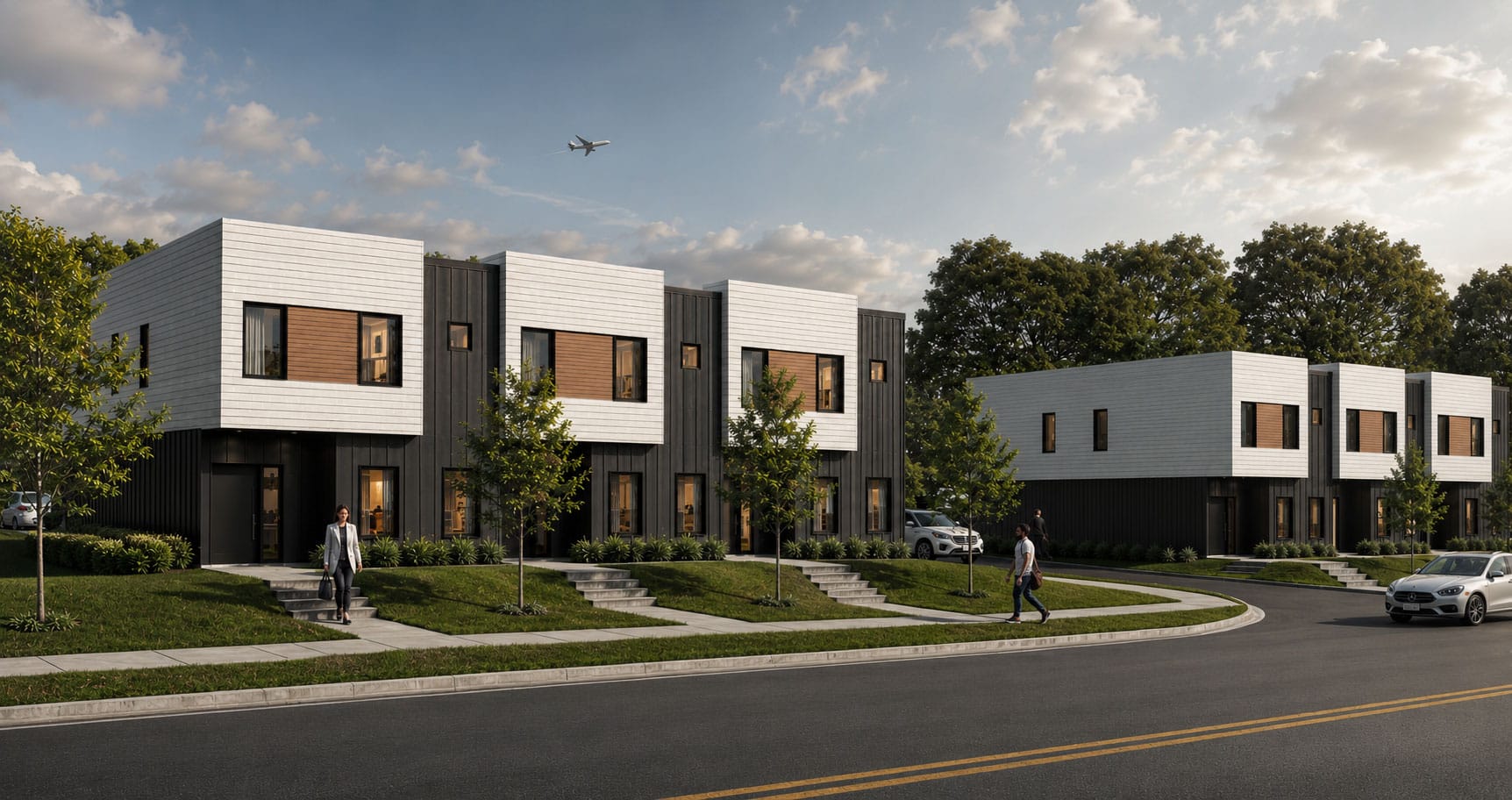
Many owners want a sustainable building without a clear idea of what that requires. This episode explains where the real gains come from: early decisions, a well-detailed envelope and a shared standard. Our architecture practice approaches buildings in the same way, for example in the adaptive reuse at Hedgemore Flex and the multi-unit planning at Metric Townhomes, and our interior architecture work builds on those decisions inside the building.
About the Guest
Kristina Held is the founder and President of Held Architecture, a Charlotte practice focused on sustainable, Passive House and mixed-use design, master planning and commercial upfits. She grew up in Montenegro and Germany, studied architecture in Belgrade, earned an architectural engineering degree in Germany and a master's in architecture at UNC Charlotte, and taught interior design before launching her first firm in 2013.
Connect with Kristina Held on LinkedIn | Visit Held Architecture