


What changes when a building becomes a church
A commercial building was designed and approved for a particular use, perhaps offices, retail or education. A church is an assembly use, where many people gather in one place at the same time. That changes what the code asks of the building.
Mecklenburg County Code Enforcement’s own example shows the idea. A space that changes from one use to another can see its occupant load change, because each use is calculated differently for exit requirements. The County names the main concern: whether there are adequate exits and restrooms for the additional people. A sanctuary or auditorium holds more people per square foot than an office does, so the building has to be checked against the new load. Our general guide to change of use in Mecklenburg County explains the process.
The steps
The County’s guide lays them out, and for a congregation they look like this:
- Confirm the address and the intended use. The zoning office for the property checks that a church is permitted before the project goes to plan review.
- Complete the OnSchedule application with Mecklenburg County Code Enforcement.
- Submit plans online through the County’s system. They must comply with the North Carolina State Building Code in effect.
- Go through plan review. A design professional evaluates the space and makes the changes needed for the new occupancy.
- Receive a new Certificate of Occupancy when the permit has final approval.
Questions to ask before you buy or lease
- What is the building approved for today? Ask for the existing approved use and any drawings.
- Can the building hold the sanctuary you need? Check the ceiling height, the column spacing and the structure.
- How will people exit? Check exits, restrooms and accessible routes against the number of people you expect.
- Can the systems support it? Ask about heating and cooling, electrical capacity and the roof.
- Is there enough parking, and what does zoning say about it? Parking is reviewed separately from the building.
- Which reviews apply? Building, zoning, site or other reviews may apply to that property.
An example: Vizion Church
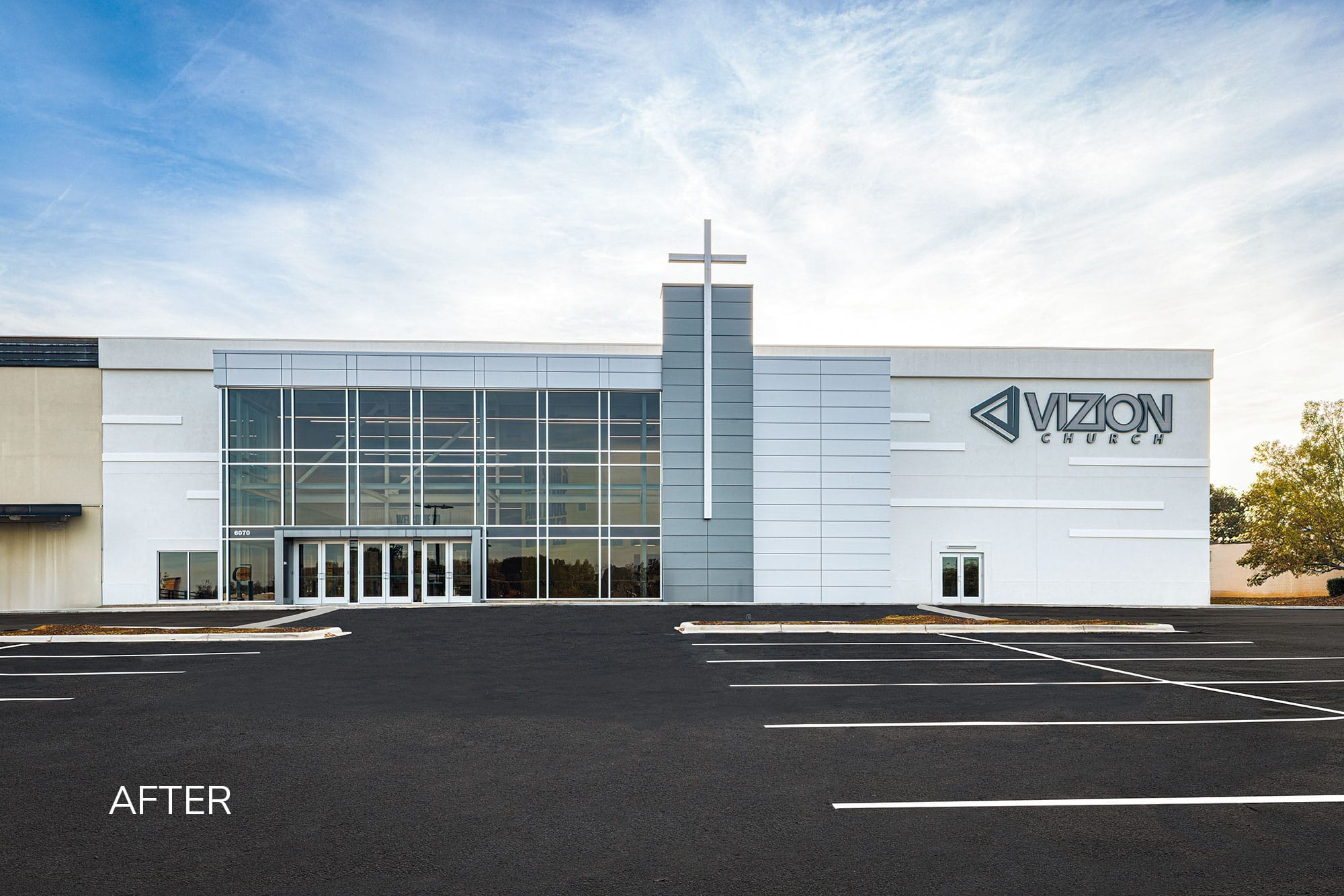
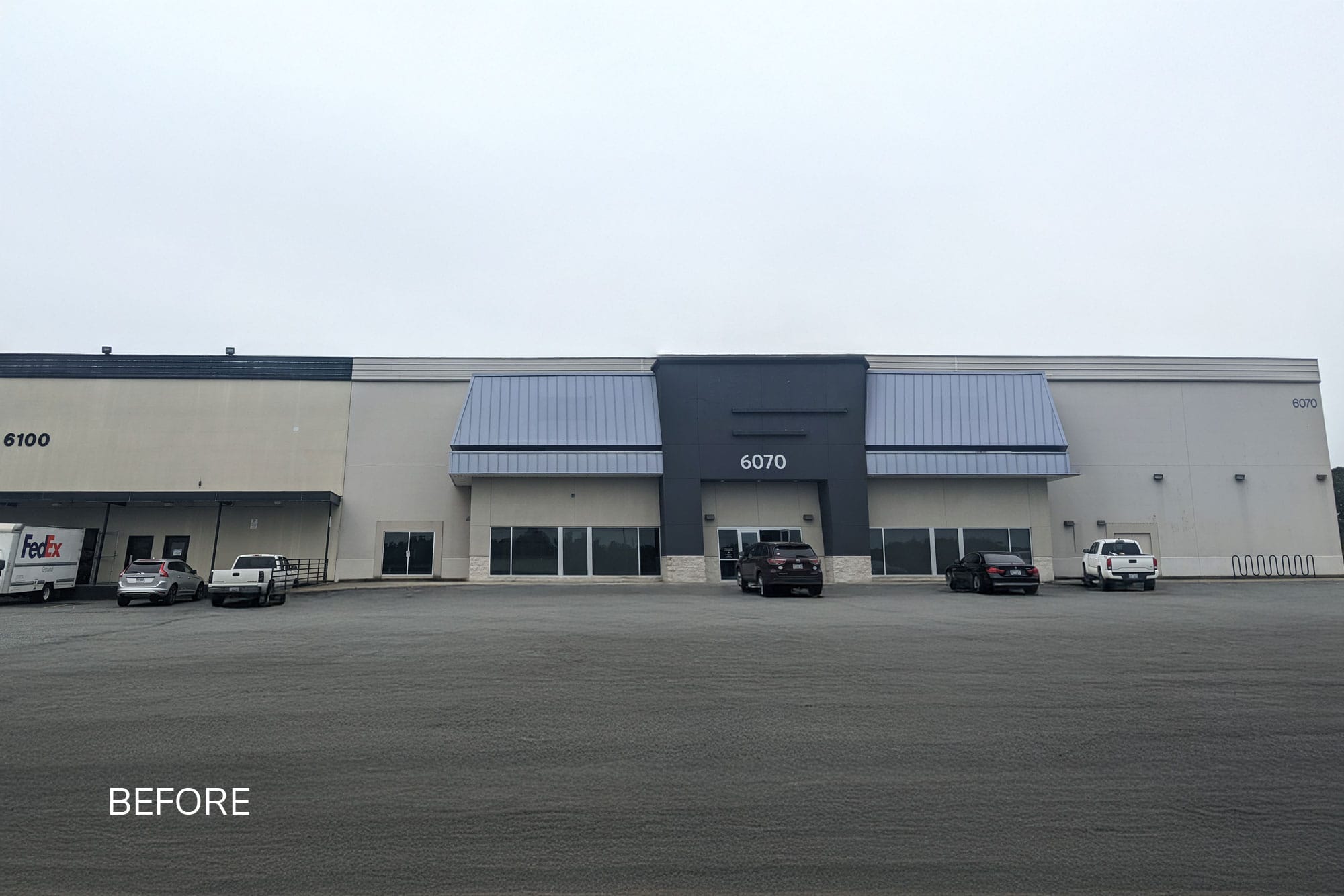
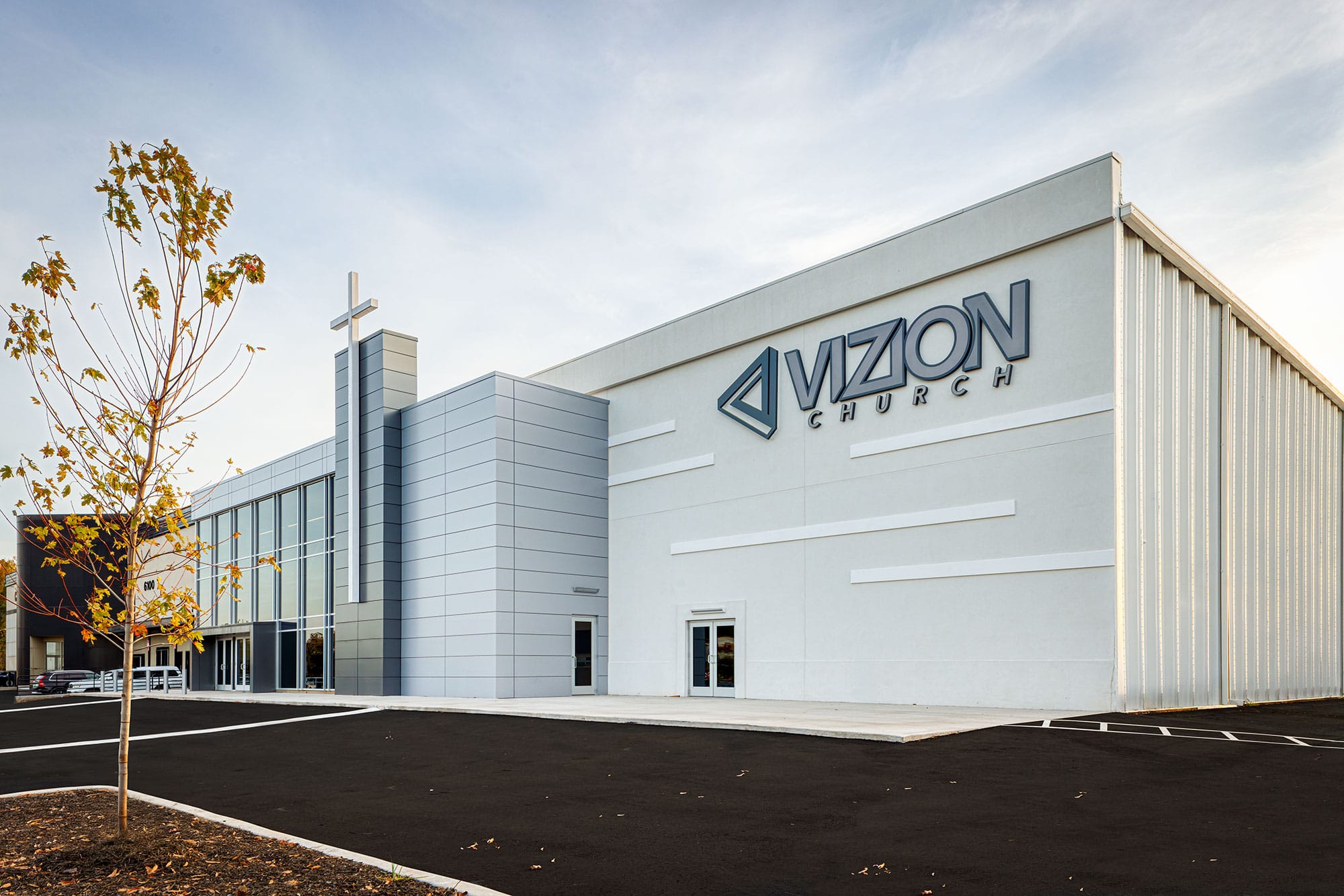
Vizion Church in Charlotte was a one-story building of roughly 100,000 SF used for higher education. The church acquired 40,000 SF of it. The conversion changed the use of the space to assembly, and it was reviewed and permitted through Mecklenburg County Code Enforcement. The result has a two-story glass entrance, a glass lobby and a tiered 1,700-seat auditorium with acoustics and audiovisual systems built in.
The money question
A conversion changes what the building costs, because the work that is needed depends on the building and the new use. Our guide to church construction costs in North Carolina shows how to separate the building from the total project, and our guide to renovating, expanding or building new compares the paths.
What to bring to a first conversation
The property address, its current use, your proposed use, the approximate square footage and any drawings. Our change of use work is limited to properties in Mecklenburg County, North Carolina, and we work with churches across North and South Carolina. To start, contact the studio, or read about our church architecture services.