
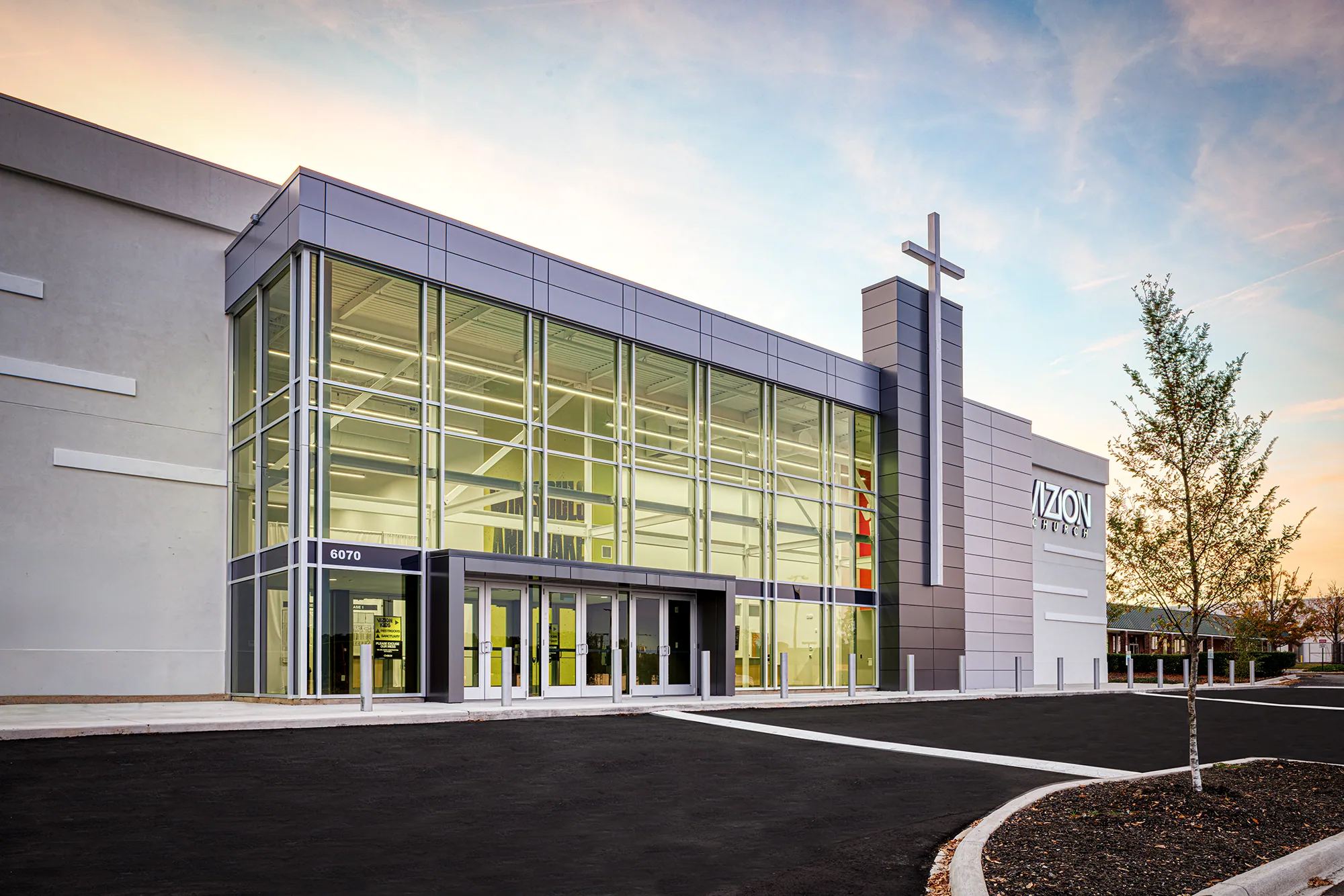
Two-story glass entrance of Vizion Church in Charlotte, NC, a converted commercial building by Ossa Studio

Adaptive Reuse for Churches: Converting an Existing Building

Published
2026
Category
Church Architecture

An existing building can become a church. Ask what it has to give up and what it can offer.

Adaptive reuse means giving an existing building a new purpose. For churches, it often means converting a commercial building: an office, a warehouse, a former school. The conversion can save time and open the door to a location a new building could not offer, but the building has to be checked for structure, exits, parking, acoustics and the entrance. At Vizion Church in Charlotte, we converted 40,000 SF of a one-story commercial building.

Two-story glass entrance of Vizion Church in Charlotte, NC, a converted commercial building by Ossa Studio
What it is
Giving an existing building a new purpose
Example
Vizion Church, 40,000 SF, Charlotte
Check first
Structure, exits, parking, acoustics, entrance
Written for
Pastors and building committees

Why congregations convert buildings

An existing building can offer a location, a size or a timeline that a new building cannot. A one-story commercial building may already have the open floor area a sanctuary needs, and parking may be in place. The conversion work then focuses on the interior, the entrance and the systems.

What to check before you commit

  • Structure. Can the roof and floor carry the new use, and can the columns work with the seating you want?
  • Ceiling height and open area. A sanctuary needs height and clear space.
  • Exits and restrooms. Assembly use brings more people into the space, so exits and restrooms are checked against the new occupant load.
  • Parking. Zoning reviews it separately from the building.
  • Mechanical and electrical. The systems need capacity for more people and for audiovisual equipment.
  • Acoustics. Sound in a converted space needs design, so plan the acoustics and AV consultants early.
  • The entrance. A commercial entrance rarely says “church”, so the arrival is worth redesigning.

Vizion Church: from commercial building to church

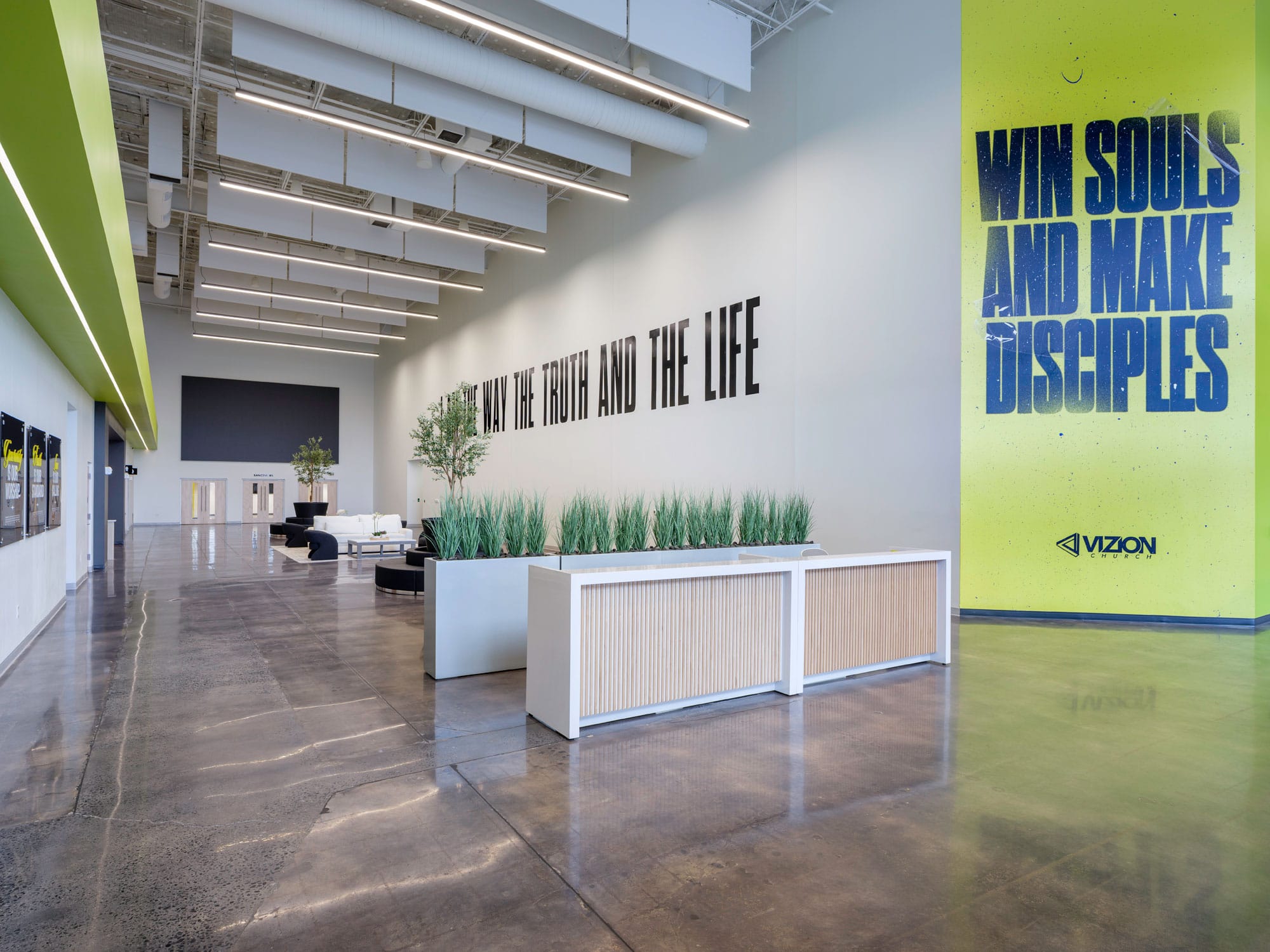
Vizion Church in Charlotte was a one-story building of roughly 100,000 SF used for higher education. The church acquired 40,000 SF of it. We reimagined the structure with a contemporary façade, an expansive glass entryway and a signature cross tower, and inside, a tiered 1,700-seat auditorium with acoustics and audiovisual integration. The soaring glass lobby brings in natural light. The conversion changed the use of the space to assembly and was reviewed and permitted through Mecklenburg County Code Enforcement.
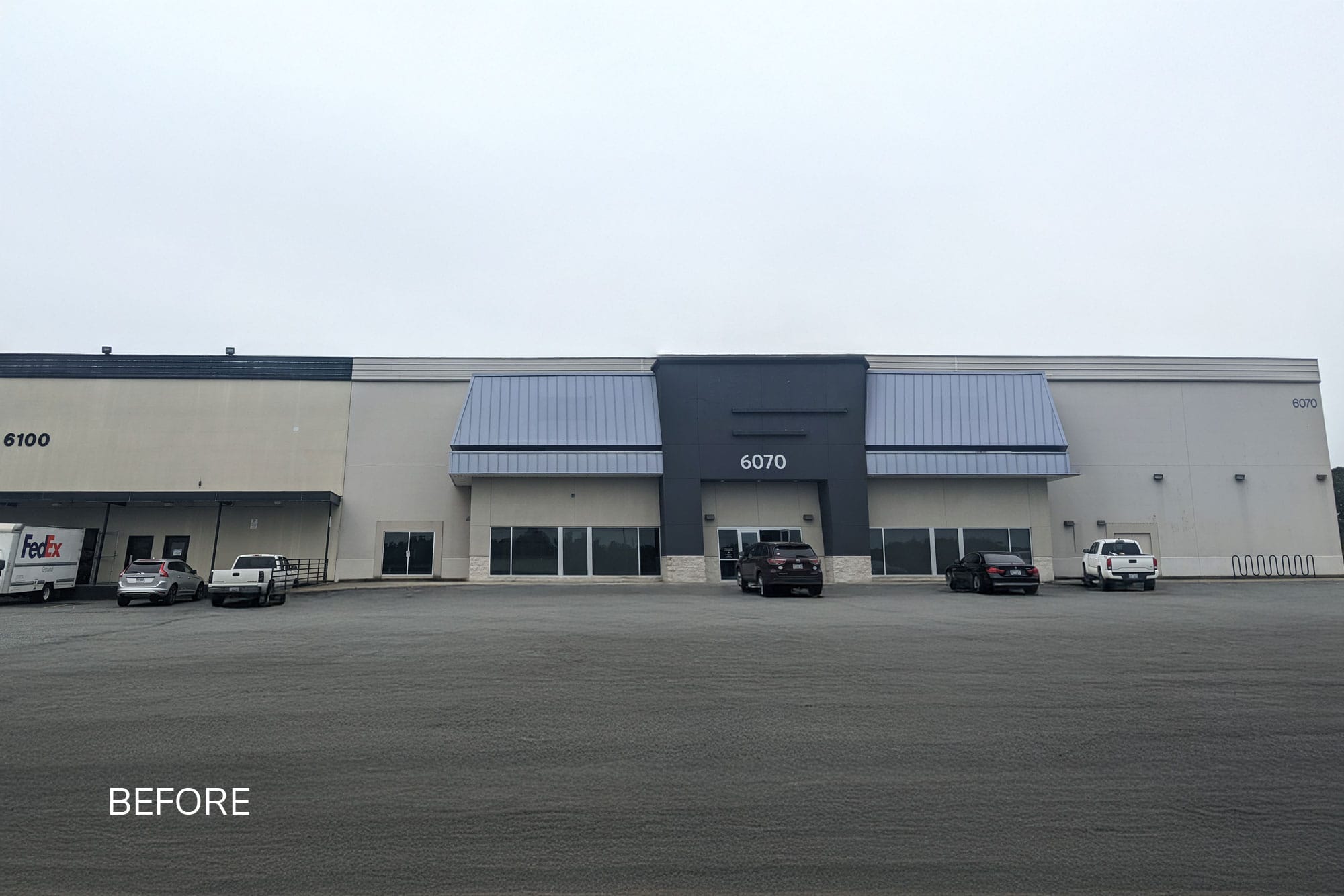
The existing commercial building in Charlotte, NC before its conversion into Vizion Church by Ossa Studio
The existing building before it became Vizion Church, Charlotte, NC.
The lobby of Vizion Church in Charlotte, NC with polished concrete floors and greenery, by Ossa Studio
The lobby of Vizion Church after the conversion.

The process

The steps for a conversion in Mecklenburg County are the same as for any change of use: confirm the use with zoning, complete the OnSchedule application, submit plans, pass plan review and receive a new Certificate of Occupancy. Our guide to turning a commercial building into a church goes through them, and our guide to change of use in Mecklenburg County explains the County’s process.

Convert, expand or build new

Adaptive reuse is one of three paths. Our guide to renovating, expanding or building new helps a congregation compare them. To plan the costs, read church construction costs in North Carolina.

What to bring to a first conversation

The property address, its current use, the approximate square footage and any drawings, plus your congregation size and growth goals. Our change of use work is limited to properties in Mecklenburg County, North Carolina, and we work with churches across North and South Carolina. Contact the studio or read about our change of use architecture services.

Frequently asked questions

Can any commercial building become a church?
Not every one. The building has to be checked against the requirements for an assembly use, including exits, restrooms, structure and parking, and the property has to be allowed to host a church. An early review shows what to expect.
Is converting cheaper than building new?
It depends on the building. A good fit can save time and money, and a poor one can cost as much as new. Our guide to renovating, expanding or building new compares the paths.
What makes a good building to convert?
A building with a large open area, a suitable structure, enough parking and systems that can support more people. The review of those questions comes before the purchase.
Does a conversion need a permit?
Yes. A change to an assembly use is reviewed by Mecklenburg County Code Enforcement in our area, along with zoning. Our guide to turning a commercial building into a church explains the steps.
Portrait of Jack Ossa, Founder and Principal of Ossa Studio

Jack Ossa

Founder and Principal, Ossa Studio

Jack Ossa is the Founder and Principal of Ossa Studio, a multidisciplinary firm in Charlotte, NC that offers architecture, interior design and branding services to clients across the Southeast.

All articles by Jack Ossa

Let’s work together.

Studio

4539 Hedgemore Dr. Suite 101
Charlotte, NC 28209